MODELS
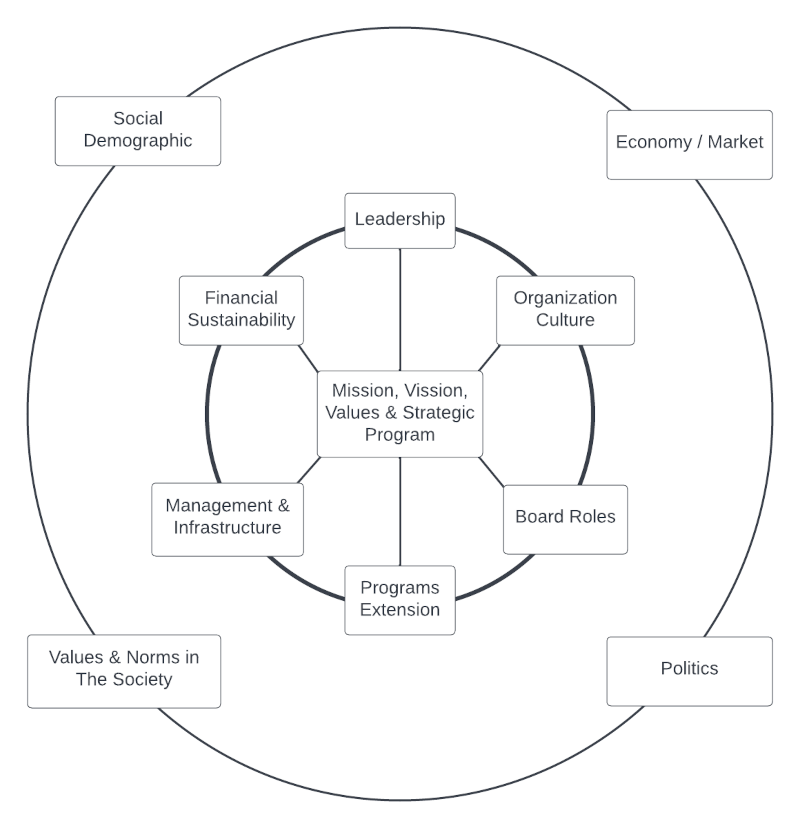
ECOSYSTEM FRAMEWORK
Human value and purpose-driven engagement-fulfillment models
We use a deliberate, collaborative approach to cultivate and engage an “organic eco-system model” for human fulfillment with both local business and community needs.
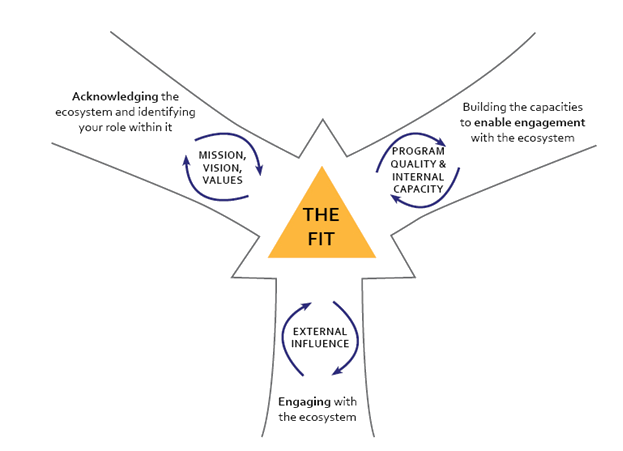
ORGANIC & BLENDED SYSTEMS
(blended-mechanistic applications)
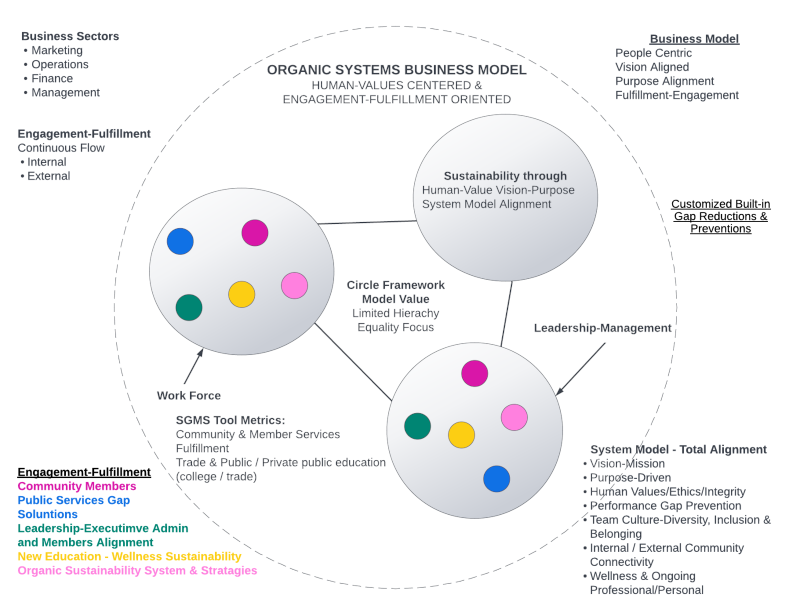
Business
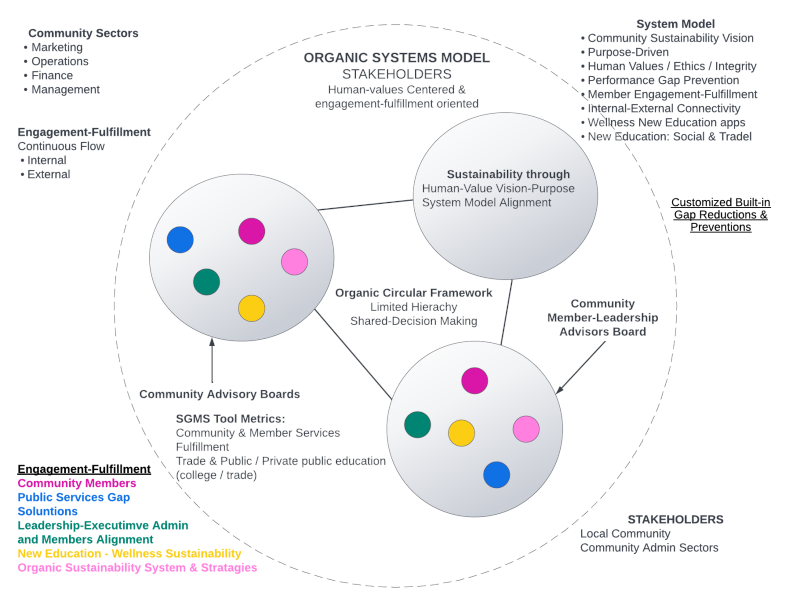
Community
Education
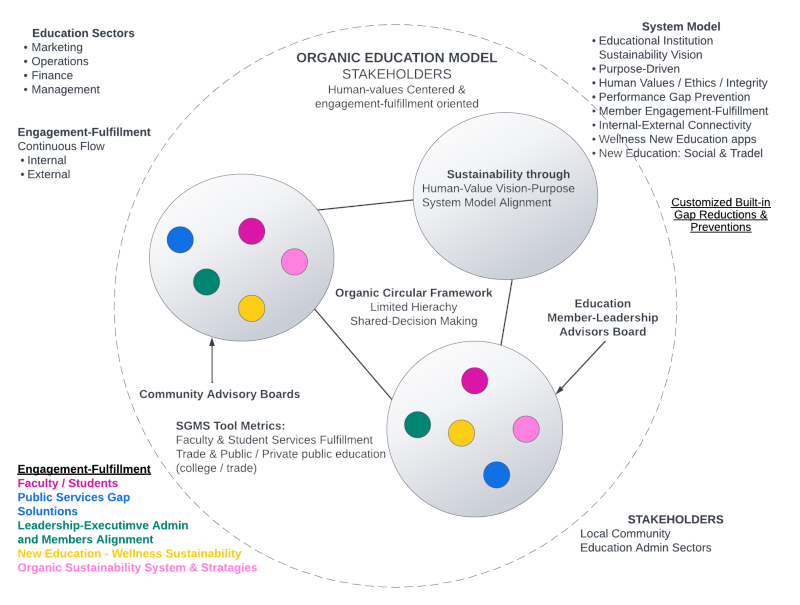
ECO System
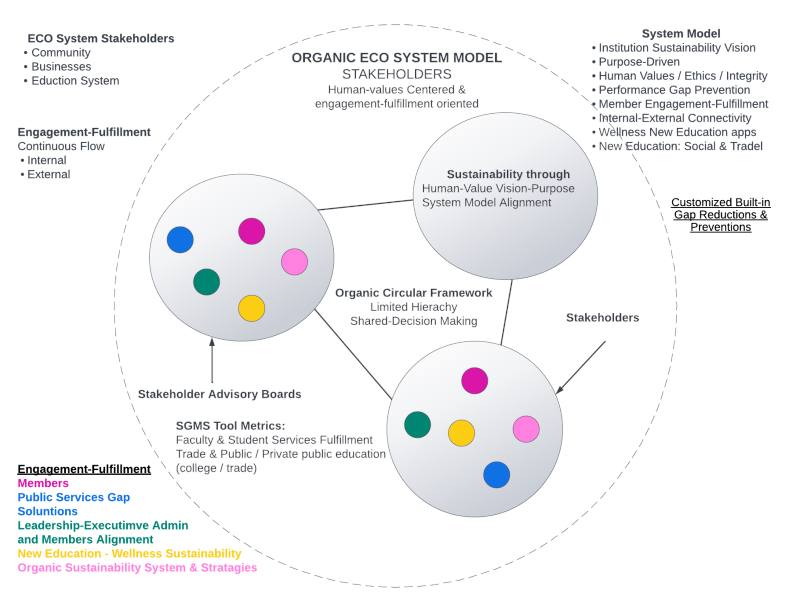
SGMS GAP Models
Business Engagement-Fulfillment Flow Models
(Ecosystems Alignments)
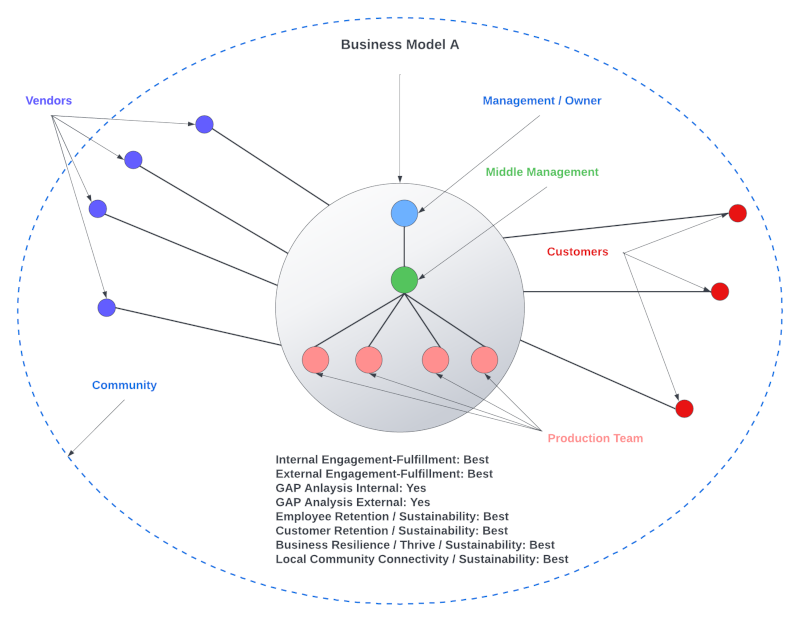
The “business models” below show the engagement-fulfillment process models with “gaps” and an “ecosystem” view in different stages. All participants are stakeholders who collectively can bridge all current and future gaps through engagement-fulfillment processes for the greater good of both the individual and collective stakeholder.
Post pandemic economic challenges with customer segments, workforce retention, suppliers-distributors shortages require the human-value and purpose-driven engagement-fulfillment system with an ecosystem alignment focus using gap solutions.
Current and future market stability requires a healthy engagement-fulfillment and dynamic business ecosystem that organically aligns all internal and external stakeholder interests to build individual and collective solidarity and growth for common customer bases.
The engagement-fulfillment completion schedule can initiate an ecosystem alignment through the organization, collation and connection of relevant data models to resolve both the engagement-fulfillment and ecosystem gaps.
A healthy local business and community ecosystem has internal and external alignments to and with all stakeholder relationships for individual and the collective good with continuous adaptability. HAF uses sigma 6 models with gap analysis to identify, remove and prevent business engagement-fulfillment gaps with workforce, customers, suppliers, distributors, customers, competitors and local community members.
Business Model A depicts optimal alignment both internally and externally. SGMS Tools are in use to measure the engagement-fulfillment gap. Now Gen Z will be more likely to work within this framework which leads to a more sustainable business. (Community Framework also available)
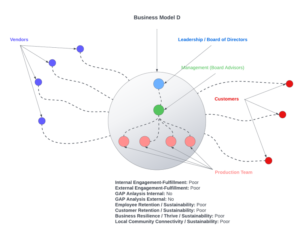
Business Model D depicts a business in total chaos. There is minimal communication either internal or external. There’s no internal / external communication (or gap analysis for engagement-fulfillment) which is critical for Generation Z (GEN Z) and others. This business model is not sustainable. (Community Framework also available)
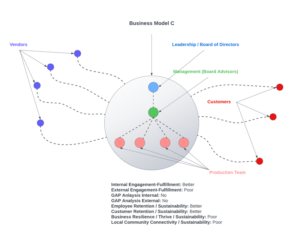
Business Model C has is improved communication internally but still no (or minimal) gap analysis for engagement-fulfillment. Engagement-fulfillment is critical to the Gen Z generation. This is better than Model D but is still has minimal sustainable growth. (Community Framework also available)
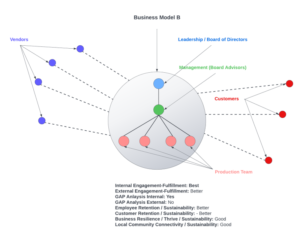
Business Model B is much better due to the use of SGMS Tools which allow closing the engagement-fulfillment gap. These analysis Tools enable an objective way to measure this, so, internally this business model is much better. However, for optimal results, the SGMS Tools should be added outside to include vendors and customers. (Community Framework also available)
ACTION GROWTH SERVICE-STRATEGY MODEL
Our organizational action-growth & service-strategy model