SAMPLES
HAF CHANGE MODEL SAMPLES : Sequence and Options available

Strategy for engaging each Stakeholder Type:
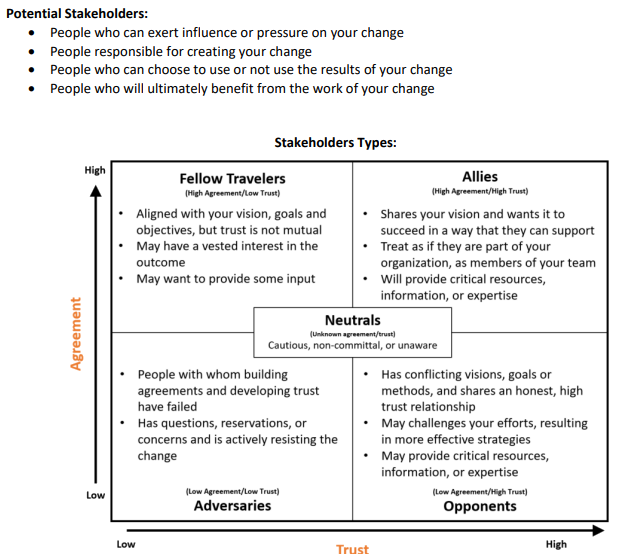
Once your stakeholders are identified into the appropriate type, it is a best practice to prioritize stakeholder
engagement in the following order:
1) Allies,
2) Opponents
3) Fellow Travelers
4) Neutrals
5) Adversaries
This prioritization strategy ensures the highest level of ongoing support for the change effort.
Stakeholder Approaches:
Listed below are various approaches for each Stakeholder Type to either maintain or shift each stakeholders’
level of commitment.
Allies (High Agreement/High Trust)
An approach for Maintaining Agreement and Trust
Goal: Affirm agreement
1. Reaffirm the quality of the relationship
2. Acknowledge any doubts and vulnerability you have with respect to your vision and project
3. Discuss their issues or concerns with your project
4. Ask them for advice and support
5. Achieve understanding on their role and responsibilities
6. Confirm their commitment to support your project
Fellow Travelers (High Agreement/Low Trust)
An approach for Maintaining Agreement and Increasing Trust
Goal: Build trust
1. Reaffirm agreement by reiterating the value and importance of their support of your project
2. Acknowledge any caution that exists
3. Make it clear you are not expecting them to get actively involved
4. Ask them how they would like to be updated on the project going forward
Opponents (Low Agreement/High Trust)
An approach for Shifting Commitment and Maintaining Trust
Goal: Build agreement
1. Reaffirm the quality of the relationship
2. Identify their particular skills and talents and how these connect to your project
3. State your position (case for change, vision for change, benefits to them)
4. State what you think their position is in a neutral way
5. Extend a personal invitation for them to get involved with your project
6. Engage in problem-solving so that you build something together
7. Confirm their commitment to support your projects
Adversaries (Low Agreement/Low Trust)
An approach for Shifting Agreement and Increasing Trust
Goal: Minimize threat to your project
1. Estimate the impact on your project if this person is not on board
2. Identify individuals who can educate you about this person, their issues and concerns
3. State your position (case for change, vision for change, benefits to them)
4. Ask questions that respectfully uncover root cause of their resistance
5. State what you think their position is in a neutral way
6. Identify your own contribution to the lack of trust that exists
7. End the meeting with your plans and no demands
8. If you are going to go around them or over them, tell them your plans
9. Let go; the more you try to convert and pressure them, the more entrenched they will
become in their position
Neutrals (Unknown Agreement and Unknown Trust)
An approach for Determining Agreement and Level of Trust
Goal: Educate and determine their position
1. State your position (case for change, vision for change, benefits to them)
2. Ask where they stand
3. Ask what it would take for them to support your project
4. Extend a personal invitation for them to get involved with your project
CHANGE READINESS PROCESS SAMPLE


Transition Model (Bridges)
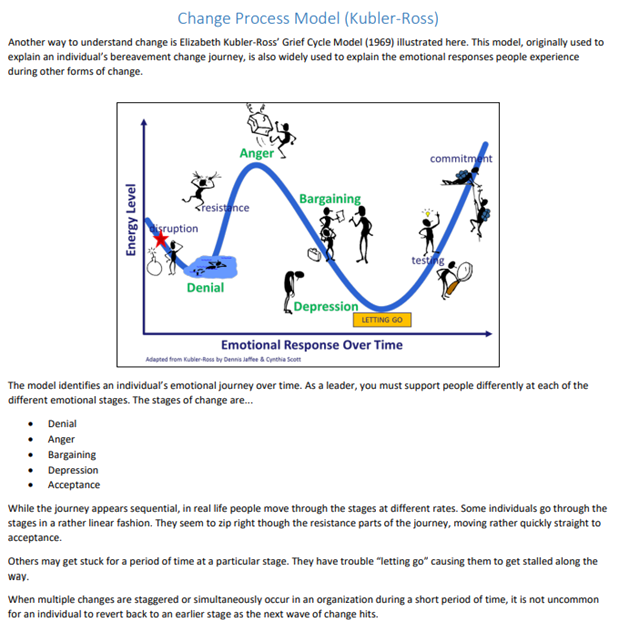
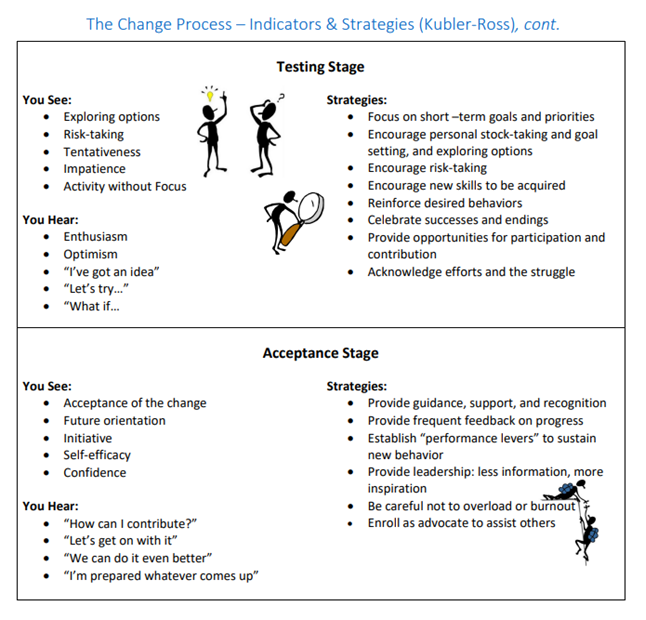
As a leader of change, it is important to recognize how change will impact the emotional experience of an employee. One way to understand change is in terms of situation and transition.
Change is situational. It is a disruption of expectations (e.g. new worksite, manager, roles, policy, processes, technology, etc.). Every change, even the most longed for, requires leaving something behind and letting go.
Transition is psychological. It is the process people must go through to come to terms with the new situation.
It requires letting go of something, grieving in some way, experiencing feelings of loss and processing those effectively in order to move forward. This requires time and, since it is experienced internally, it may be invisible or hard to observe in others.
The transition process has three stages:
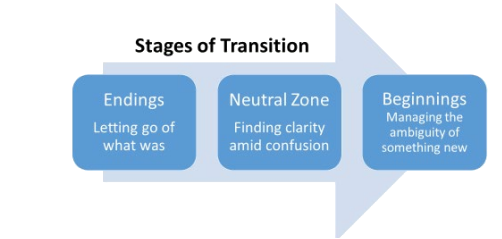
The work of Endings is letting go of the way things have been, including acknowledging what will end and what will be retained in the new.
The work of the Neutral Zone is finding clarity amid confusion. This is the space between the old familiar way and the future state. It is filled with both danger and opportunity. It feels like being between trapezes, where there is nothing to hold onto.
The work of Beginnings is managing the ambiguity of starting something new. It requires understanding why the old way had to change, having a picture in mind of the future state, a plan for getting there, and a role in the new state

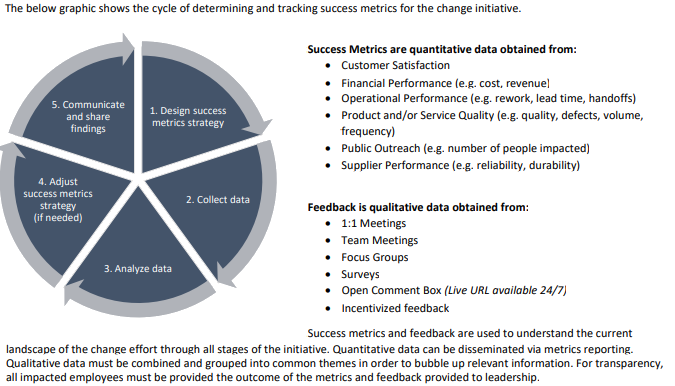
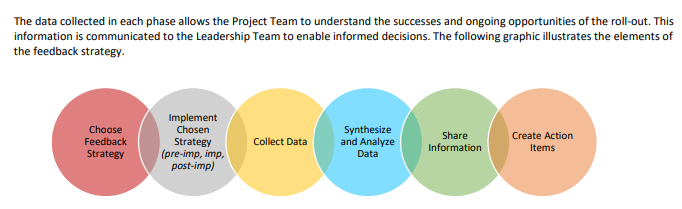
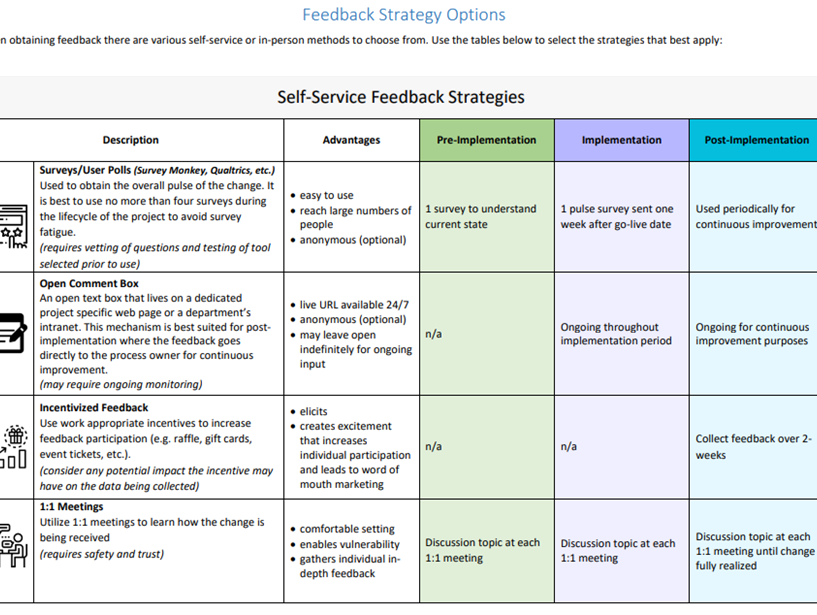
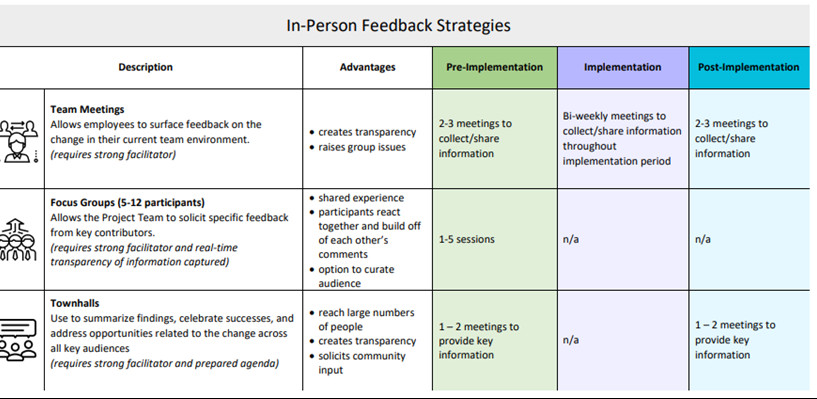
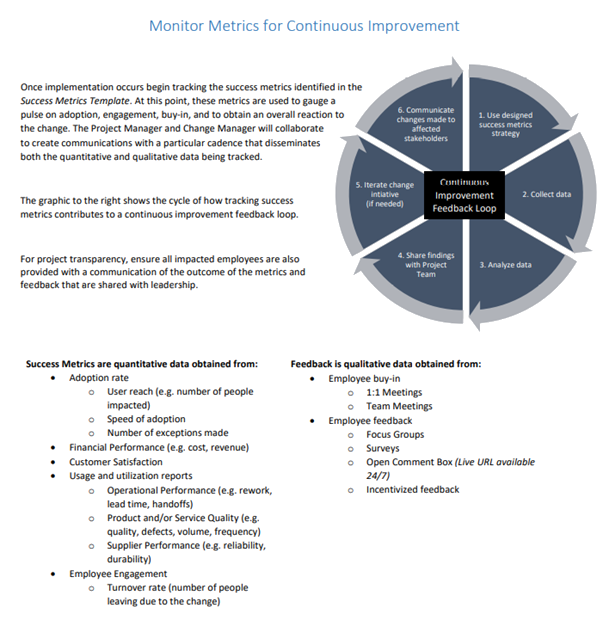
Feedback Strategy Overview