
Central Arkansas Above Pre-Pandemic Job Growth Levels
Central Arkansas has shown faster job growth in the past two years than during the pre- COVID-19 period, Metroplan noted in its December report, “Metro Trends: Economic Review and Outlook.”
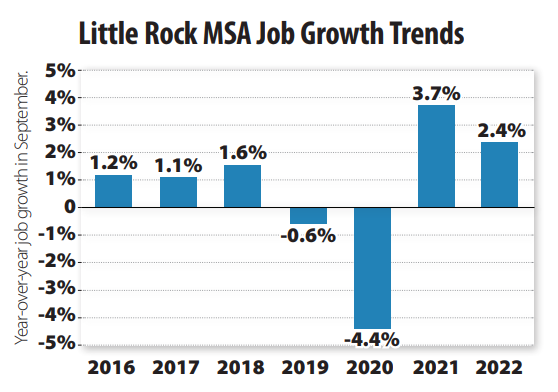 “There are signs of structural economic change underway,” said the report, pointing to the area’s manufacturing and logistics sectors in particular.
A chart showing job growth in central Arkansas
Since early 2021, manufacturing has been gaining ground at a faster pace — 4% to 6% year-over-year — than the previous 2015-2020 period, the report said.
The most dramatic changes in the regional economy have been in wholesale trade and in transportation and warehousing.
America Is Moving To Arkansas
 Want to know what’s prompting so many Americans to pack up and move to Arkansas these days? Just ask Martin Smith, landscape architect and resident of Birdeye in Cross County in northeast Arkansas near Memphis.
“I think it’s an excellent place for young couples to come and settle,” Smith says. “With the advent of technology and connectivity, you can do anything here. The Natural State is true to its name. Why Arkansas? For me, it’s the cultural aspect, the authentic experiences of the Delta, the natural resources, the ability to go rock climbing, to go mountain biking, to float in the bayous. It’s the beauty of the state, the beauty of the people, the beauty of the rural communities and the towns. That sums it up.”
Smith has plenty of company. According to a report by HireAHelper, Arkansas was the No. 1 state that people moved into, by ratio, during 2021. Arkansas had 44% more people move into the state than move out.
The study looked at more than 90,000 moving jobs booked in the U.S. through its online platform during 2021. It compared these numbers to 2020 data to identify population shifts and the net gains and losses that each state had last year.
Many of those who elected to relocate to Arkansas cited the state’s low cost of living (third lowest in the U.S.), abundant options of affordable housing, and plethora of outdoor activities that can be enjoyed year-round.
Inflation Pressures Ease Slightly on Main Street but Remains the Top Business Problem
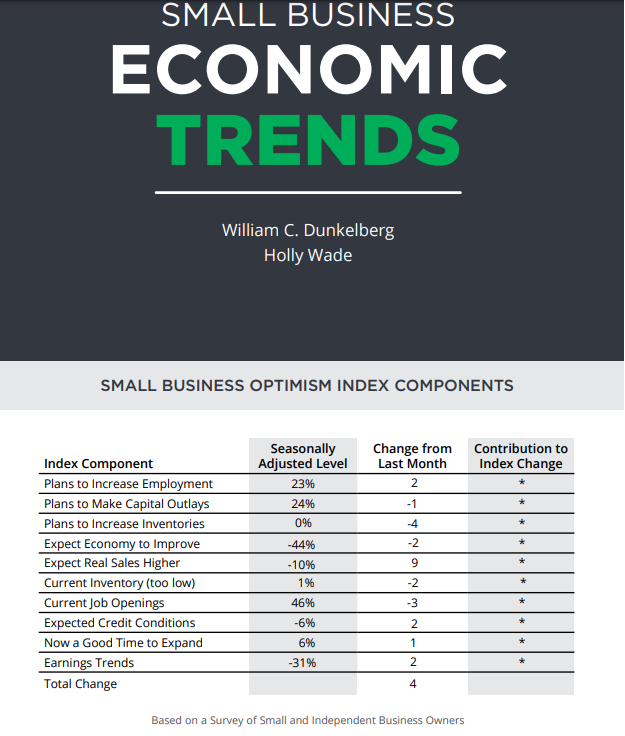
Inflation remains the top business problem for small business owners, with 32% of owners reporting it as their single most important problem in operating their business, five points lower than July’s highest reading since the fourth quarter of 1979. The Small Business Optimism Index rose 0.6 points in November to 91.9. November’s reading is the 11th consecutive month below the 49-year average of 98.
Key findings include:
- Owners expecting better business conditions over the next six months improved three points from October to a net negative 43%, a recession reading.
- Forty-four percent of owners reported job openings that were hard to fill, down two points from October, but historically high and not typical of a recession period.
- The net percent of owners raising average selling prices increased one point to a net 51% seasonally adjusted, a high reading but lower than earlier this year.
- The net percent of owners who expect real sales to be higher improved five points from October to a net negative 8%, a weak economic reading.
Information and analysis on the Arkansas economy
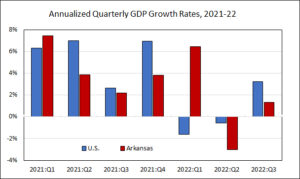 The Bureau of Economic Analysis reported today that Arkansas GDP expanded at an annual growth rate of 1.3% in the third quarter. The BEA report noted that 47 states plus the District of Columbia showed positive growth. Arkansas’ growth rate ranked 41st among the states, and was significantly lower than the U.S. growth rate of 3.2%.
Data for previous quarters was unrevised, so the latest data represents an update to our previous report.
Although Arkansas’ growth rate has been slower than the national average in the second and third quarters of 2022, cumulative growth since 2019:Q4 shows Arkansas well-above the U.S. In the 11 quarters since that pre-COVID reference point, Arkansas cumulative growth rate of 6.9% translates to an average annual rate of 2.4%. By comparison the U.S. annual average growth rate over that period was 1.6%.
Arkansas Poll Finds Economy Still Top Concern
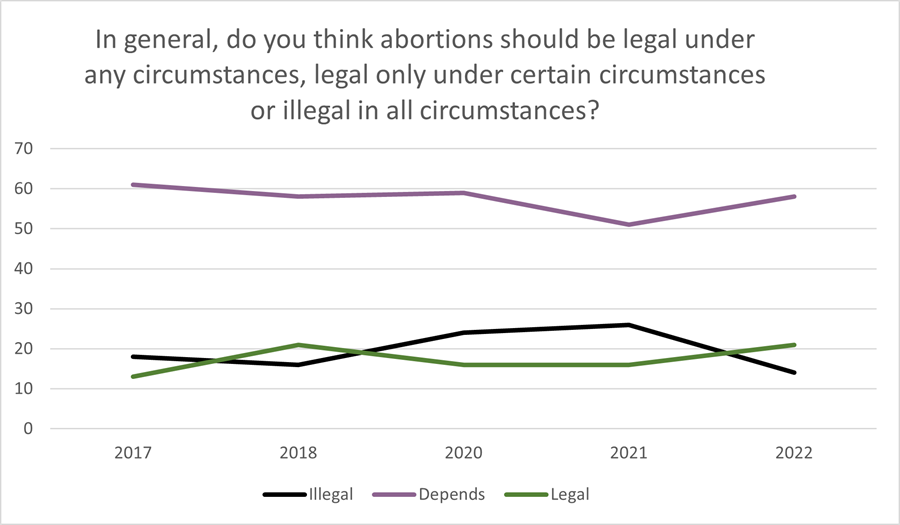 The 24th annual Arkansas Poll, released today, found voters continue to be most concerned about the economy, politics and drugs, which were two of the top three concerns from 2021 (drugs supplanted healthcare as the third most important issue). However, concerns about the economy are significantly higher than they were in the previous two years.
The 2022 poll also addressed approval ratings for public figures, as well as positions on current issues, such as ballot issues for this election cycle, gun control and climate change.
Several questions related to abortion were also included. Additional questions addressed political party affiliation and ideology, life in Arkansas and opinions about female politicians.
While two of the top concerns of Arkansas voters were unchanged from the previous year, the acuity of concern increased for both issues. Concerns about the economy jumped 17 points – from 22% in 2021 to 39% in 2022. The number of people concerned about politics/politicians nearly doubled as well, jumping from 10% in 2021 to 19% this year.
Reflecting those concerns, the Arkansas Poll saw a 5-point increase from last year in the number of respondents who felt Arkansas was going in the wrong direction, and a 19-point increase in the number of people who felt they were doing worse financially compared to last year.
“Economic and political uncertainty are crowding out other concerns this year,” said Janine Parry, director of the Arkansas Poll and professor of political science at the University of Arkansas. “While that’s somewhat in keeping with reality, those big jumps highlight how national events distort local perceptions. Here in Arkansas — which is what the question asks about — most signs point to economic growth and political stability. But in our hyper-nationalized environment, that gets overlooked.”
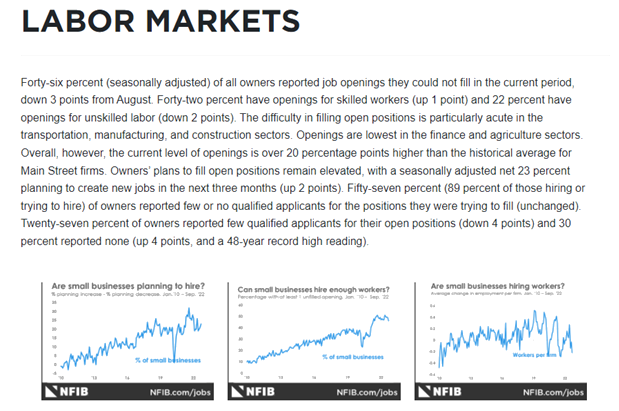
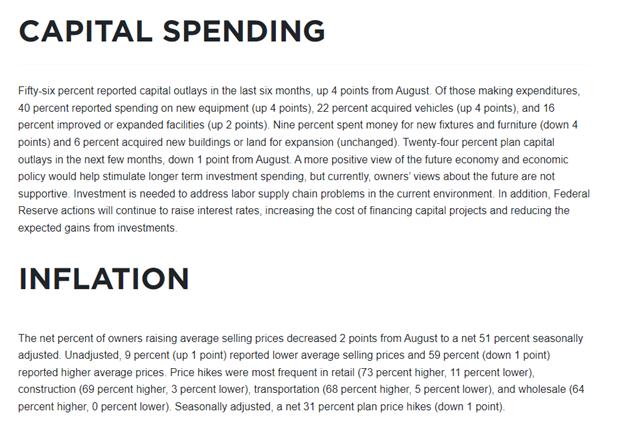
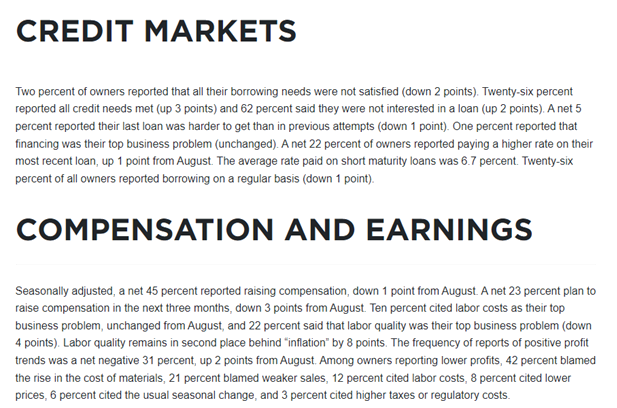
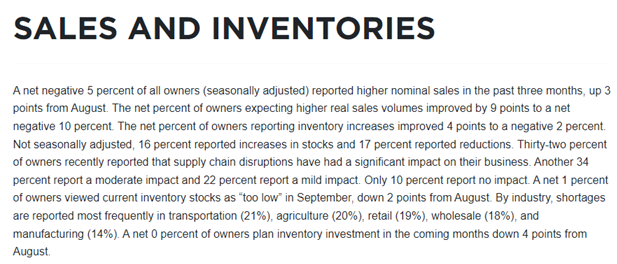
Small Business Economic Trends
Business Sustainability Trends Expected In 2022
Business Sustainability Trends to Expect in 2022
Over the past year, more and more companies have begun to realize the importance of a sustainable business model. The combination of increased government regulations and the pressure placed on businesses by the public have forced sustainability into the forefront. In fact, recent studies have shown, brands that are more environmentally responsible are outperforming less sustainable companies. In this article, we’ll cover some of the sustainability trends we can expect from businesses in 2022.
Increased Integration of Environmental and Social Impact Objectives
Traditionally, the sustainability initiatives of most companies were pretty straightforward. Their only goal was to help the company operate more sustainably. They never considered the impact they have on other social movements. However, businesses have begun to respond to the growing popularity of responsible consumerism by crafting sustainable initiatives focused on prominent social movements as well.
For example, Unilever recently launched its regenerative agriculture principles to protect waterways and increase biodiversity. This initiative was designed to do more than just make the company more sustainable, however. It also empowers farmers by supporting local environments and soils. In doing so, Unilever’s sustainability project also played an active role in supporting local produce, which is experiencing growing public support.
In 2022, we expect more businesses to follow in the footsteps of Unilever. Companies will create sustainability initiatives intended have an impact on interlinking social movements. Prominent social movements we expect many companies to target are gender equality, worker rights and responsible production. (Read more)
Walmart lays off corporate employees
Walmart lays off corporate employees after slashing forecast
PUBLISHED WED, AUG 3 20224:58 PM EDTUPDATED THU, AUG 4 202210:44 AM EDT
by Melissa Repko
- Walmart confirmed on Wednesday that it has begun to lay off corporate employees.
- The news comes about a week after the company slashed its profit outlook and warned that consumers had pulled back on discretionary spending due to inflation.
Walmart has begun to lay off corporate employees, the company confirmed Wednesday, about a week after it slashed its profit outlook and warned that consumers had pulled back on discretionary spending due to inflation.
In a statement to CNBC, the retail giant described the layoffs as a way to “better position the company for a strong future.”
About 200 jobs have been cut, a person familiar with the matter told CNBC.
Anne Hatfield, a Walmart spokesperson, declined to comment on which divisions were affected but said the retailer is still hiring in parts of its business that are growing, including supply chain, e-commerce, health and wellness, and advertising sales.
“Shoppers are changing. Customers are changing,” she said. “We are doing some restructuring to make sure we’re aligned.” (Read More)
Source: CNBC
Ford Plans Job Cuts
Ford Plans Up to 8,000 Job Cuts to Help Fund EV Investment
By Keith Naughton and Edward Ludlow, July 20, 2022, 2:23 PM CDTUpdated on July 20, 2022, 2:39 PM CDT
- Reductions seen coming from unit producing gas-fueled models
- CEO has said Ford profit hampered by having ‘too many people’
Ford Motor Co. is preparing to cut as many as 8,000 jobs in the coming weeks as the automaker tries to boost profits to fund its push into the electric-vehicle market, according to people familiar with the plan.
The eliminations will come in the newly created Ford Blue unit responsible for producing internal combustion engine vehicles, as well as other salaried operations throughout the company, said the people, who asked not to be identified revealing internal discussions. The plan has not yet been finalized and details could still change.
The move would mark a significant step in Chief Executive Officer Jim Farley’s plan to cut $3 billion of costs by 2026. He has said he wants to transform Ford Blue into “the profit and cash engine for the entire enterprise.” In March, Farley radically restructured Ford, cleaving its carmaking in two by creating the “Model e” unit to scale up EV offerings and “Ford Blue” to focus on traditional gas burners like the Bronco sport-utility vehicle. (Read More)
Source: bloomberg.com
Local Community Stability
LOCAL COMMUNITY SECURITY, PEACE AND ECONOMIC STABILTY
LOCAL COMMUNITY EDUCATIONAL FULFILLMENT PHASES – TO FULFILL THE NEEDS OF EDUCATIONAL INSTITUTIONS, LOCAL COMMUNITY NEEDS AND STUDENT POPULATION
HAF social and economic revitalization incorporate the “new educational model” for current and future community sustainability and resilience.
This model will initiate its first phase (Aug 2022) with the “RESOURCE MODEL” that can be installed into each community through its stakeholders that include but not limited to; educational (college and trade school) institutions, college and trade school student populations to provide jobs for the educational fulfillment purpose of each community. The student population that is already in the job market will be its first point of resource solicitation to provide jobs (HAF) for each community. HAF will assess and provide each community’s needs for fulfillment across the board.
Further student jobs will initiate its focus on inviting each community’s high school students for internship training in each community course.
Each Community’s Chamber of Commerce will identify and organize mentors and coaches for this endeavor to fill in the areas of wellness and other public/civic (Peace Rights) duties required in the community. Community needs will focus on the organizing and distribution of food, shelter (with current community providers such as churches, shelters etc.) public services for elder and family economic assistance.
HAF will monitor all the operations with the assistance of the newly established and existing community stakeholders.
These efforts will focus on towns in each county so as not to miss any.
Any and all individuals or families that are on the border of each town or county that is not within the scope of each town and county will be addressed for resolutions within the scope of services offered.
Forestry and natural environment within and outside each town will also be included within the HAF project to sustain the integrity of these environments as well as organize crops for food.
Each town in each county will be invited to get assistance from HAF to provide proper shelter, transportation and energy (assessed and fulfilled).
HAF Peace Action will be initiated at the proper time of this phase.
HAF resources for the Peace Action projects will be organized and fulfilled through current stakeholders locally and throughout the US. This program is vital to all community members to begin their training in understanding their Right for Peace in their life.
HAF will identify and engage public advocates in each town and county to become stakeholders of these projects in a “daily or weekly” manner until the fulfillment of the needs and security of community members have been implemented.
HAF will initiate the Peace Action platform to remove the gaps in local communities to resolve any security issues of any community member, institution and organization in the community.